Why I started shooting landscapes
It began with two kilos of glass and a starfruit on a neighbour's fence. It survived because of the mist.
The first camera was a commitment. A DSLR back in the Ceylon Entertainment days — two kilos of body and glass that you didn’t bring along, you deployed. Shooting anything meant deciding, in advance, that today was a photography day.
And here’s what that weight taught me: the best subjects were always within walking distance. A starfruit hanging through a neighbour’s chain-link fence. A karavila bud against tree bark. I went looking for grand frames and kept coming home with small ones.
Then the mist
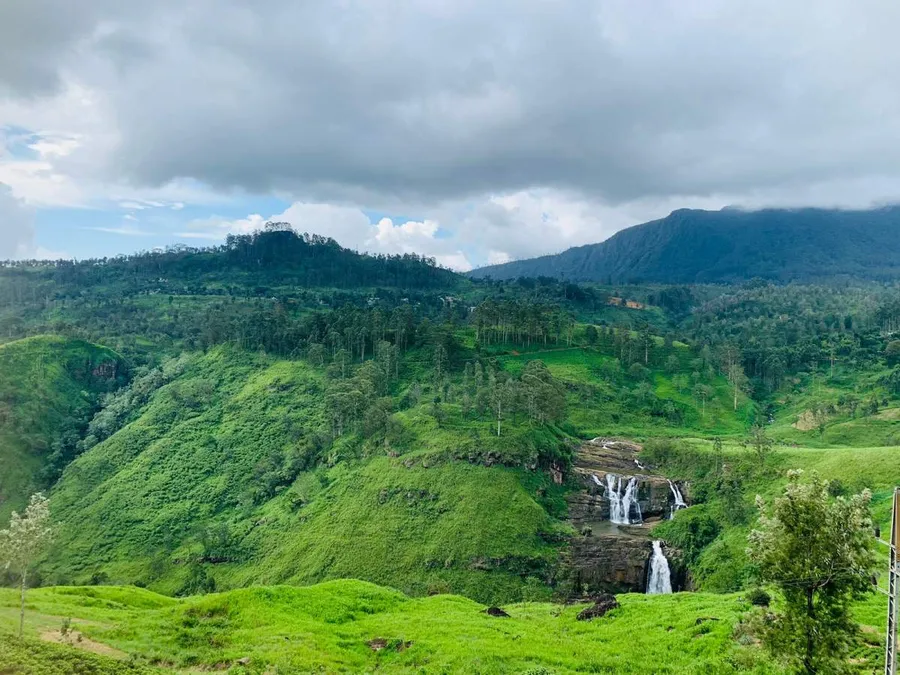
Landscapes happened to me in the up-country. If you’ve driven the Hatton road you know the moment — the valley opens, St. Clair’s falls is doing its thing under a sky that can’t decide, and the tea fields are so green they look rendered.
The mist is what hooked me. It moves through tea country like it owns the place. You don’t compose those shots; you keep up with them. Twenty minutes waiting for clouds to break, and when they refuse — the photo is better for it. Landscapes taught me a patience that no other part of my life was teaching at the time.
What changed
Two things, eventually. The phone in my pocket got good enough that “photography day” stopped being a decision — the camera was just there, on a work trip, on a drive, at dawn by a lake in Bali when the mountain kept disappearing and reappearing like it was deciding whether to be in the picture.
And I stopped needing the photos to be good. They became field notes instead — proof I was somewhere, paying attention. That’s the standard I still shoot to, and honestly, it produces better photographs than ambition ever did.
The DSLR years gave me the eye. The phone years gave me the habit. The mist gave me the reason.